
Marmorino
Two coats · low sheen
Soft cloud movement, no veining, burnished to a satin that catches light without announcing itself. The finish most rooms actually want.
Venetian plaster & painting - Flagler Beach, Florida
Slaked lime and marble dust, troweled thin and polished by hand. Every commission applied by the owner - no crews, no subcontractors.
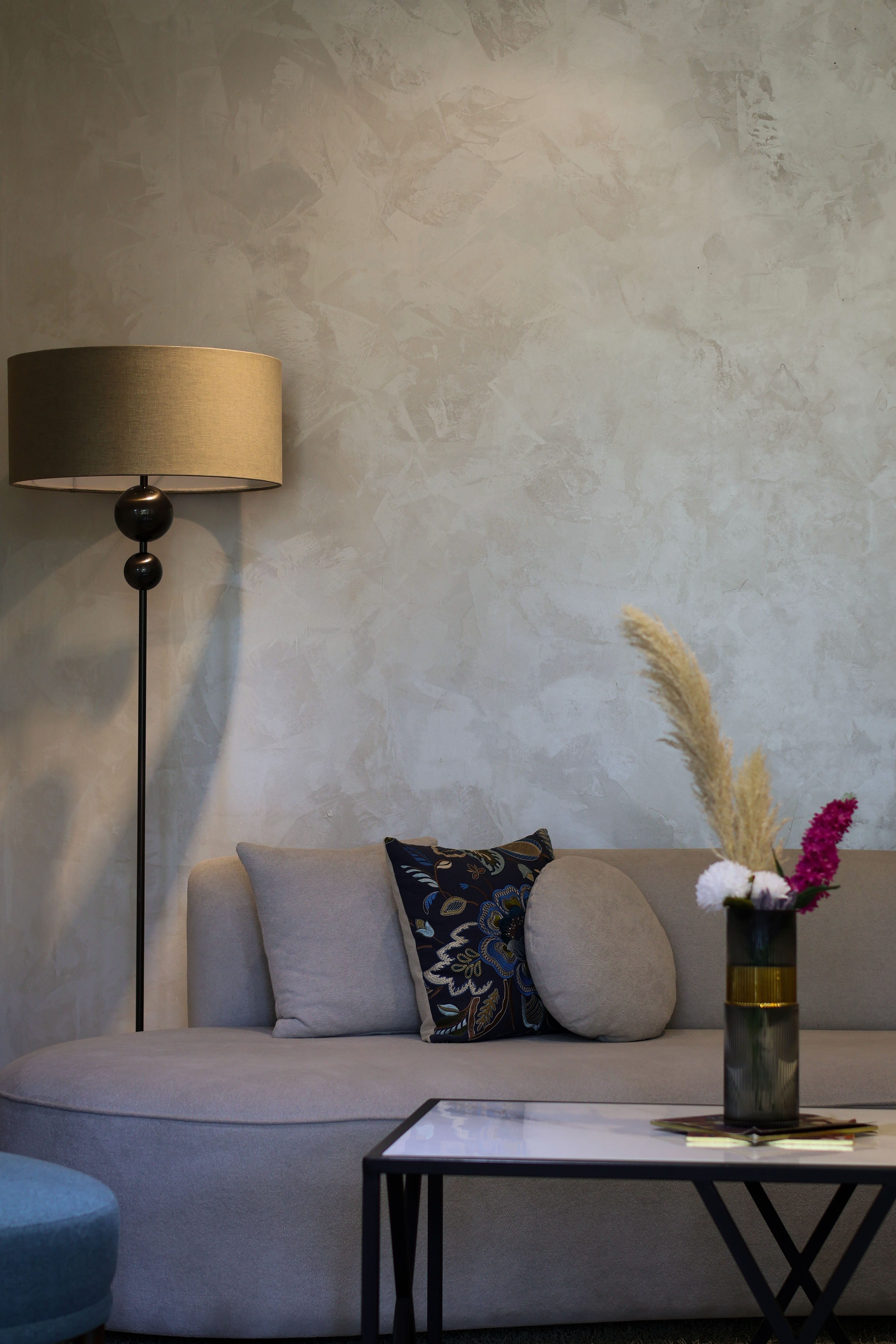
Venetian plaster is slaked lime - limestone that has been burned, hydrated, and aged - mixed with marble dust and applied to a wall in thin, overlapping coats. Each coat is compressed with a steel trowel while still soft, then polished until the surface closes. What you end up with is not a coating sitting on top of a wall. It is a mineral layer that has become part of the wall itself, with a depth and light-response that no paint or wallpaper can reproduce. It also continues hardening for months after application, pulling carbon dioxide from the room and converting back toward the limestone it started as.
See the six finishes →Each is a different number of coats, a different moment to burnish, and a different way of returning light. Drag the row.
Two coats · low sheen
Soft cloud movement, no veining, burnished to a satin that catches light without announcing itself. The finish most rooms actually want.
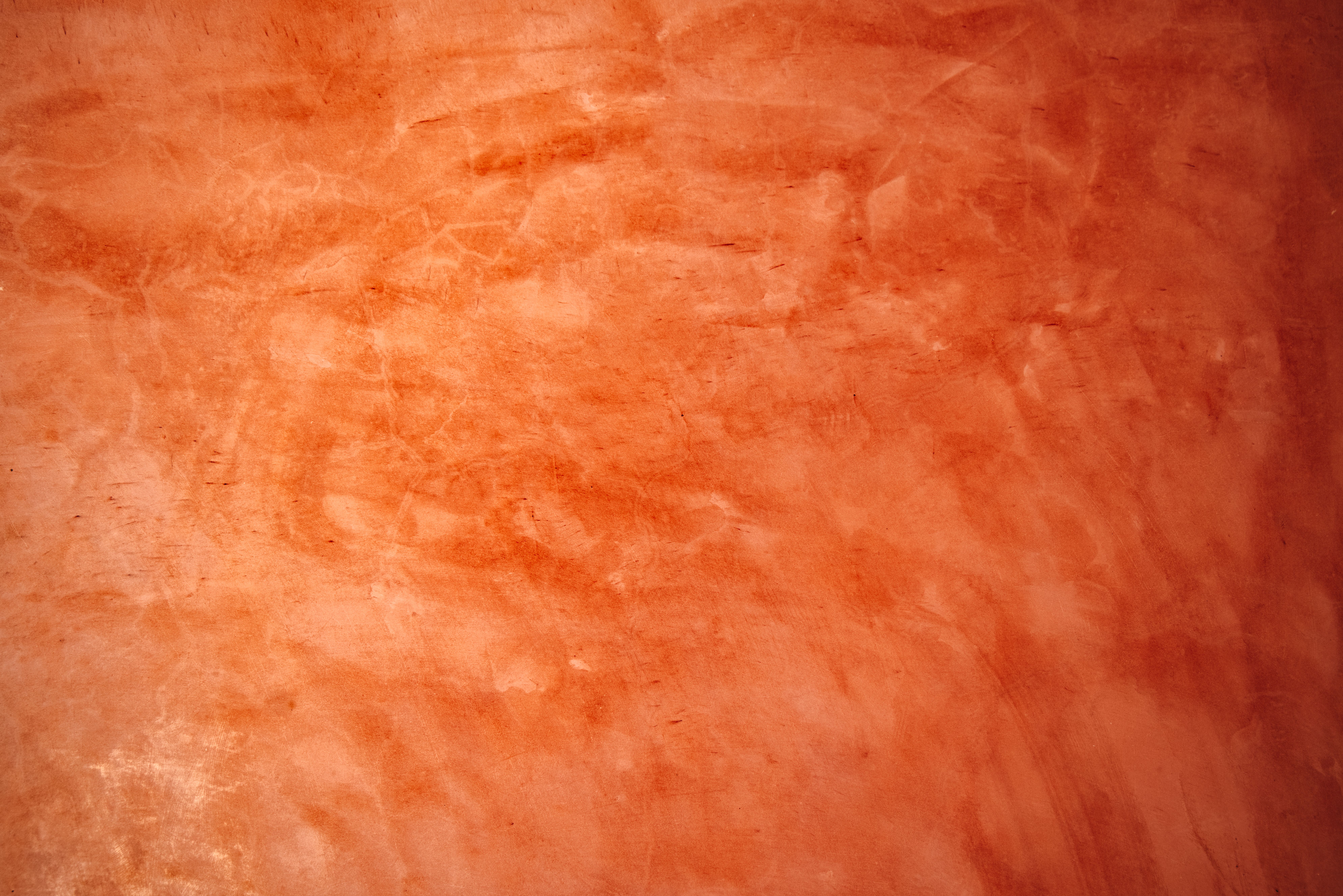
Six to eight coats · high polish
Laid on in coats thin enough to see through, then polished until the surface returns light the way wet stone does. Depth you read from across the room.

Veined · polished
Veins drawn beneath a translucent lime veil so they sit under the surface rather than on it. Approach at an angle and the wall reads as slab.

Aged putty · mirror polish
Pure lime putty taken to a full gloss. The most demanding finish in the trade and the least forgiving of a substrate that was rushed.

Sealed · waterproof
Moroccan lime compressed with a stone and cured with olive-oil soap. Rated for showers, sinks, and wet rooms, with no grout line anywhere in it.

Leaf or mica · final coat
Loose leaf and bronze mica worked into the last pass. Used on one wall, one ceiling, or one niche - never on four walls at once.
Four stages, in order. Rush any one of them and it surfaces in the last coat, where it cannot be corrected without starting the wall again.
Walls are skimmed flat and primed to a single uniform absorbency before any lime is opened. Nearly every plaster failure we get called to repair started here.
Grassello aged in the tub and tinted in the shop against your fixtures and stone. Nothing arrives pre-mixed in a five-gallon bucket with a color name on the lid.
The timing is read by feel and by sound. Too early and the trowel drags a mark you cannot take back out; too late and the surface will not close at all.
Lime pulls carbon dioxide out of the room for months and hardens back toward limestone. The wall is still getting harder long after the last invoice clears.

Lime plaster keeps hardening for years after it goes on. Whoever put it there should still be around to answer for it.House of Gold & Stone
No. Paint is a pigment suspended in a binder that sits on top of a surface. Venetian plaster is a mineral material - slaked lime and marble dust - applied in thin coats and compressed with a steel trowel until it becomes a hard, integral part of the wall. The sheen comes from the density of the material itself, not from a topcoat or sealer. It reads completely differently in light, and it continues to harden for months after it goes on.
Lime plaster was developed in climates far more demanding than coastal Florida. It is a breathing material - it permits moisture vapor to pass through rather than trapping it behind a sealed surface - which is exactly why it performs well here. Certain finishes, like Tadelakt, are suitable for wet rooms and showers. Exterior lime applications require a different specification, but they are not uncommon on the barrier islands.
A single feature wall in Marmorino runs two to three days from substrate prep through final burnish. A full room in Stucco Veneziano, which requires six to eight coats with drying time between each, is closer to a week. The schedule depends on the finish, the coat count, and how fast the lime is setting in current conditions. We give you a day-by-day timeline in writing before anything is signed.
Often, yes - but it depends on who applied the original and what material they used. Lime repairs lime cleanly. Acrylic-based "Venetian plaster" is a different product and does not accept lime repairs. We will look at it and give you an honest assessment. If the repair is not something we can make disappear, we will tell you that before we start.
Our regular service area covers Flagler Beach, Palm Coast, Ormond Beach, Daytona, St. Augustine, and the Anastasia Island corridor. Work further south or north is considered case by case - project size, access, and schedule all factor in. Reach out and we can tell you quickly whether it makes sense.
By the square foot of finished surface, with the rate varying by finish type and coat count. Substrate condition matters too - a wall that needs significant repair before lime can go on costs more than a wall that is already flat and primed to a consistent absorbency. We price every project in writing, line-itemed by surface, so you know exactly what you are paying for before any work begins.
Yes. Painting runs alongside plaster work throughout the year, held to the same preparation standard. We handle interior repaints, cabinetry and millwork, coastal exteriors, and substrate repair. See the painting section below for the full breakdown, or reach out directly if you have a specific project in mind.
Plaster is what the studio is named for. Painting is what fills the weeks between commissions, and it is held to the same standard - the same preparation, the same single pair of hands, and the same refusal to call a wall finished because the second coat went on.

“He treated our living room like his own. Every coat, every burnish - nothing was rushed, and it shows every time the afternoon light hits that wall.”
Sarah M. · Hammock Dunes
“We interviewed three plasterers. He was the only one who told us what wouldn’t work before we’d paid for it.”
David R. · Ormond Beach
“The sample boards changed everything. Seeing the finish in our own light, at our own hour, made the decision easy.”
Claire T. · Palm Coast
“Painters showed up on the day they said, finished on the day they said. That alone put them ahead of everyone else we called.”
James & Priya K. · St. Augustine
“It’s not just a nice wall. It’s a wall someone stood in front of for three days, getting it right.”
Monica D. · Flagler Beach